
P239

Private house Falkengasse, Brugg/AG

This family home is located in the old town of Brugg, directly above the Aare gorge. The building dates back to 1640.

For centuries, the walls and ceilings had been covered, layer by layer, with paint, timber panels, pavatex, and finally a plastic-based render on plasterboard. What began as a simple superficial renovation, eventually led to the removal of all layers down to the original stone walls.
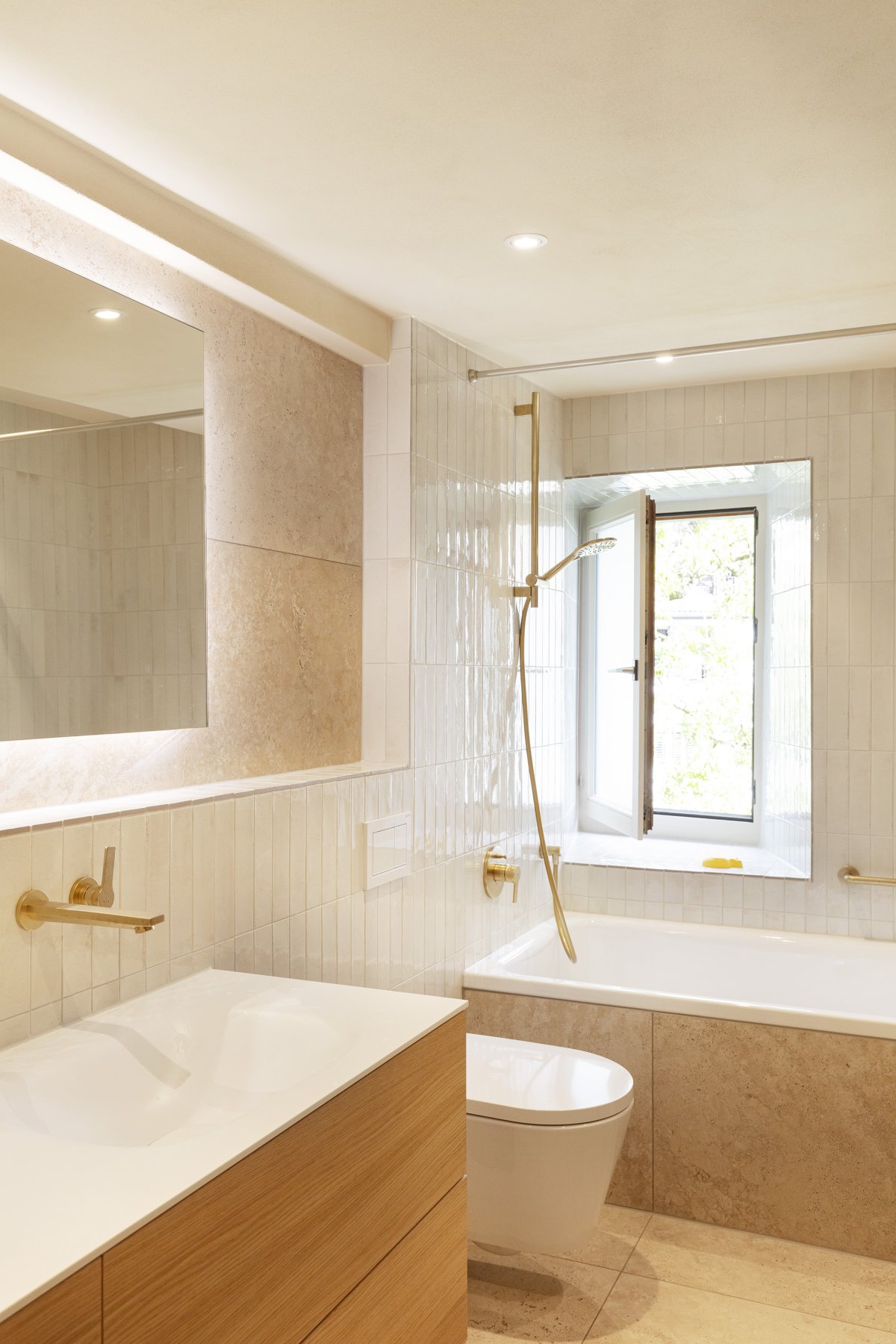
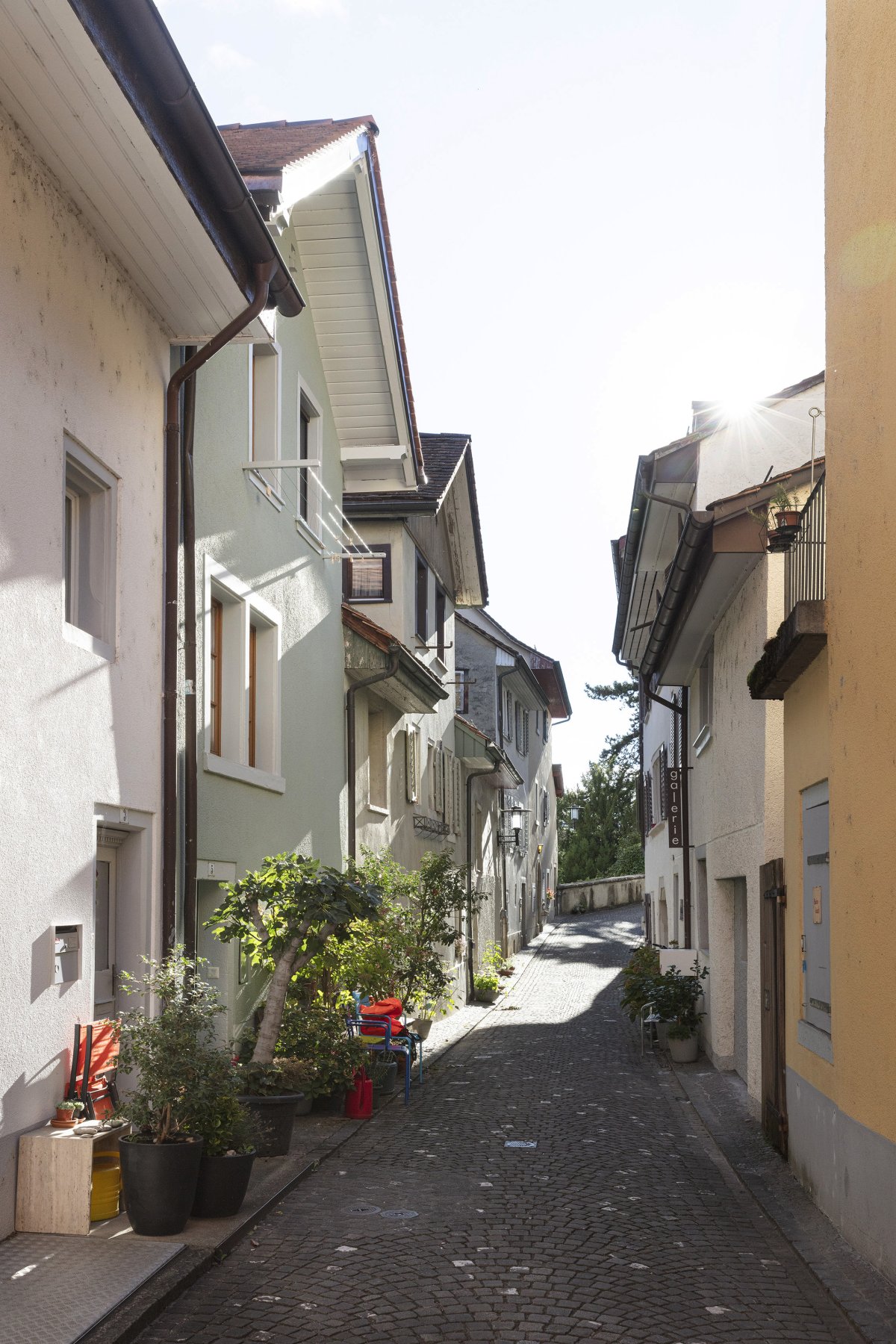
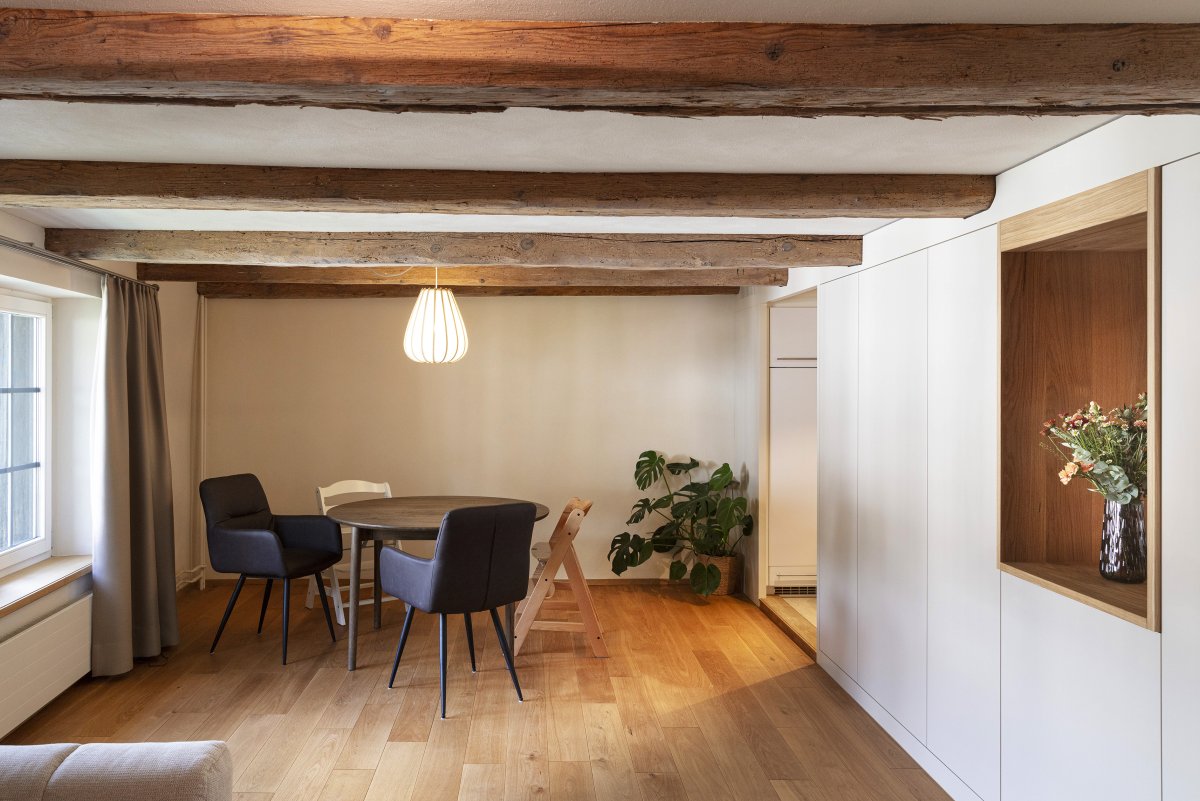
With the floors, we proceeded more cautiously. The structural timber beams were sloping, presumably as a result of the foundations sinking on the rock. The outer coverings were removed and a layer of thick floor boards were added. These boards reduced the overall uneveness, but kept some of the slope, thereby avoiding loss of headheight. The old beams were extensively repaired and strengthened in places. We were surprised that the load-bearing capacity had not been more severely affected, by alterations in the past.

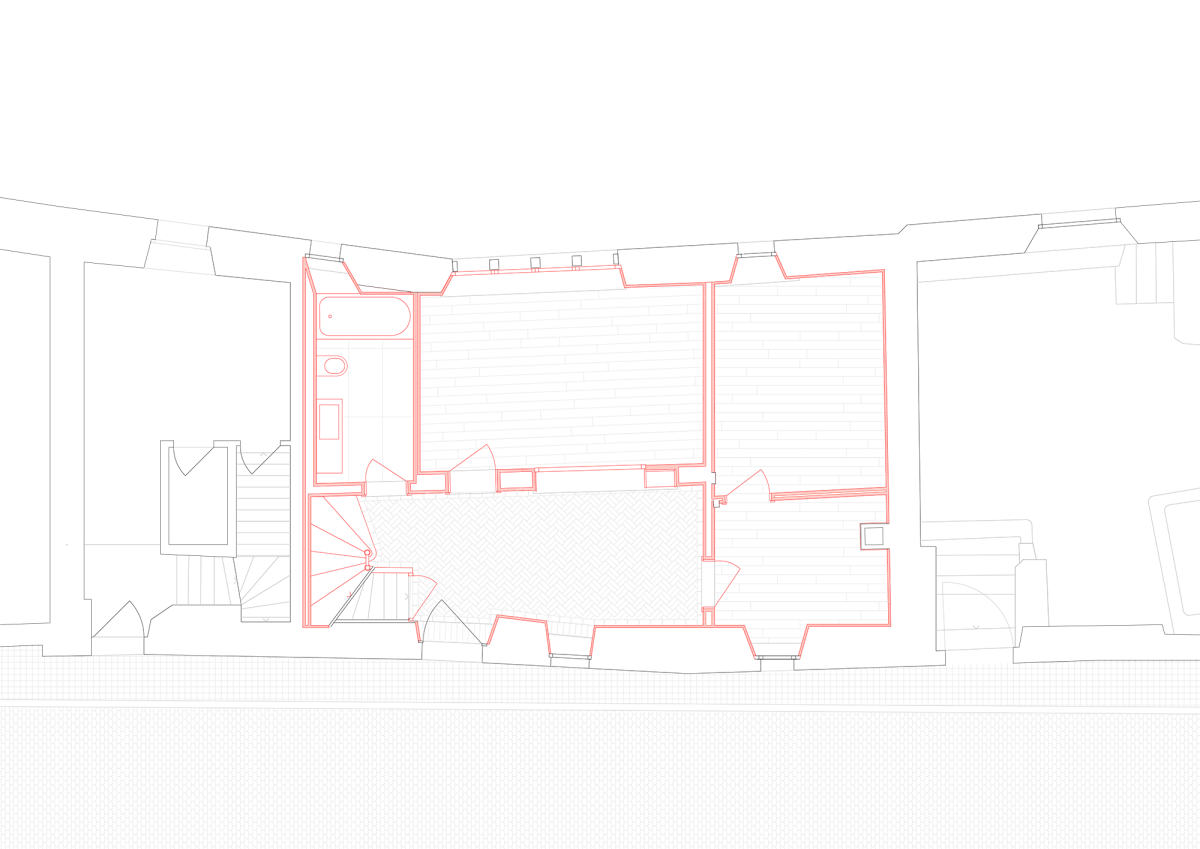
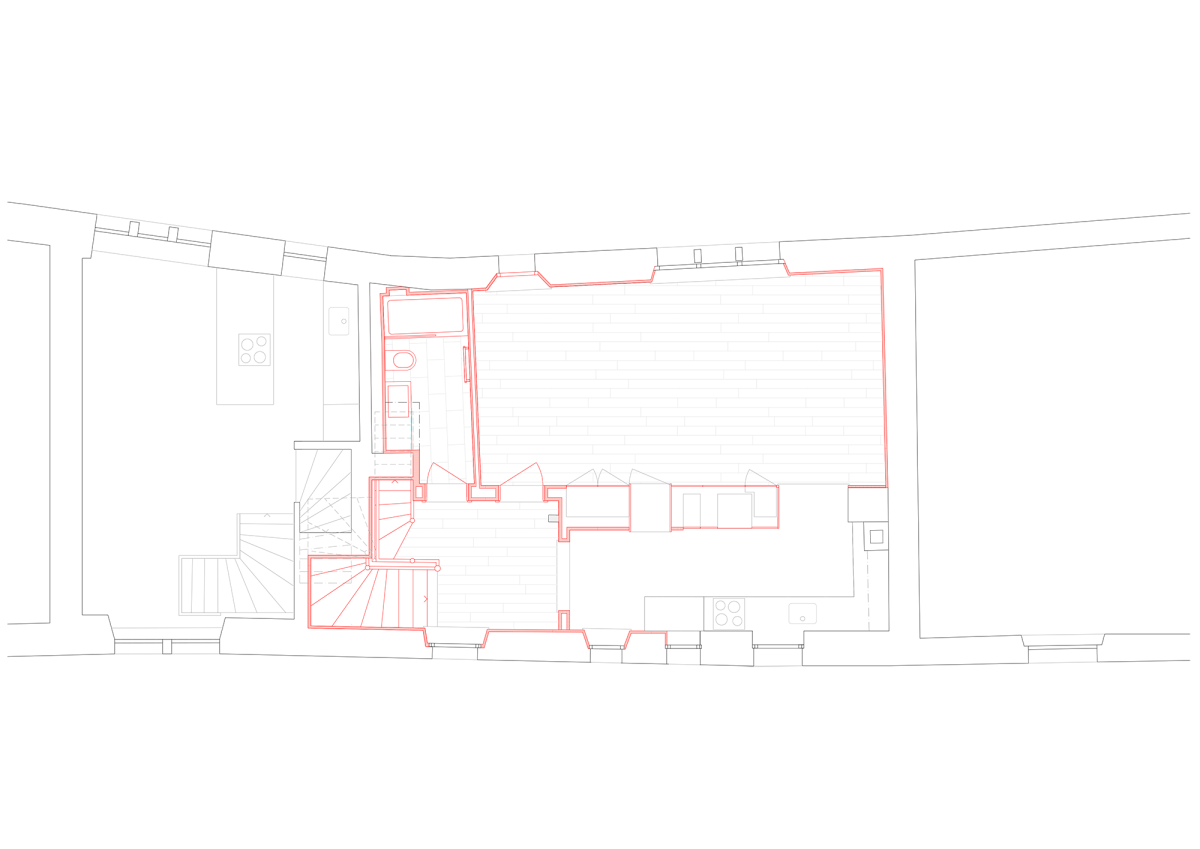
While a fire-partition wall separated the building from the neighbour to the east, to the west the two neighbouring homes were almost interwoven. The living spaces crossed the boundary in both directions and there was no fire separation here at all, which came as a surprise to the neighbour.

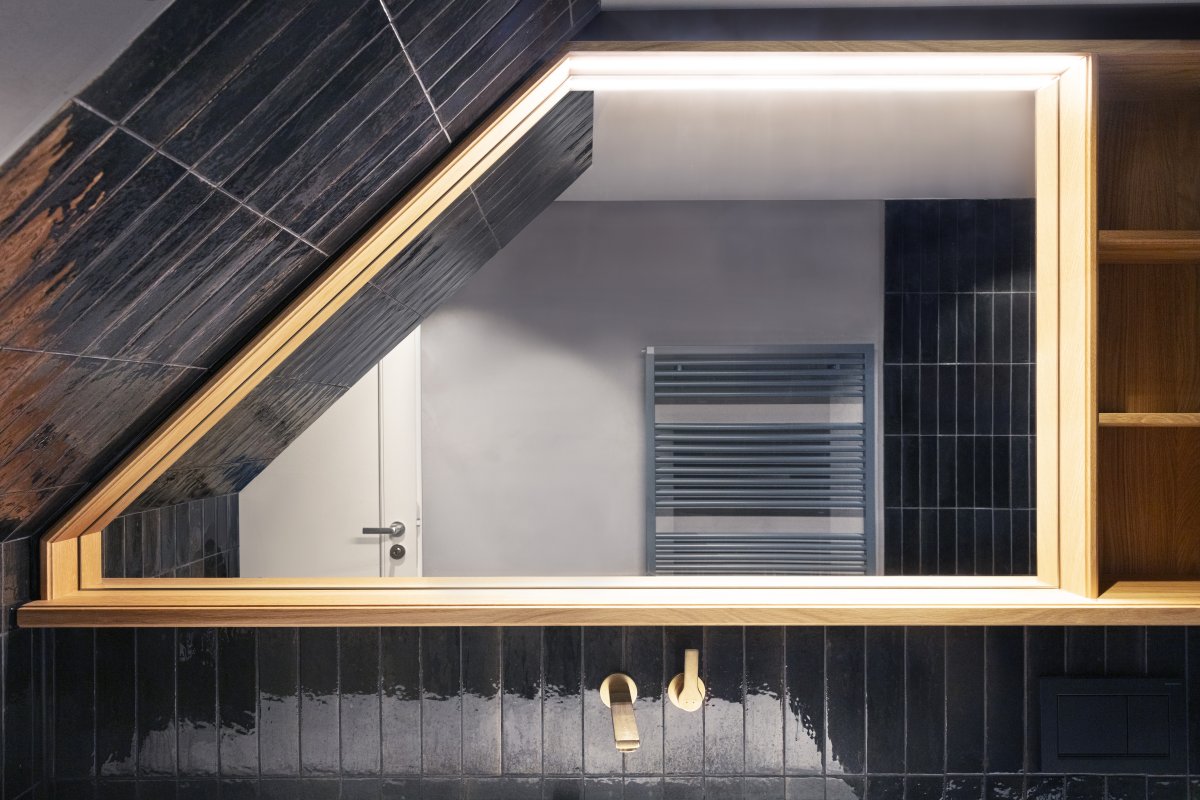
Thanks to an extensive property scan, we discovered a previously unknown cavity on the upper floor, which we later used to expand an existing toilet into a bathroom.

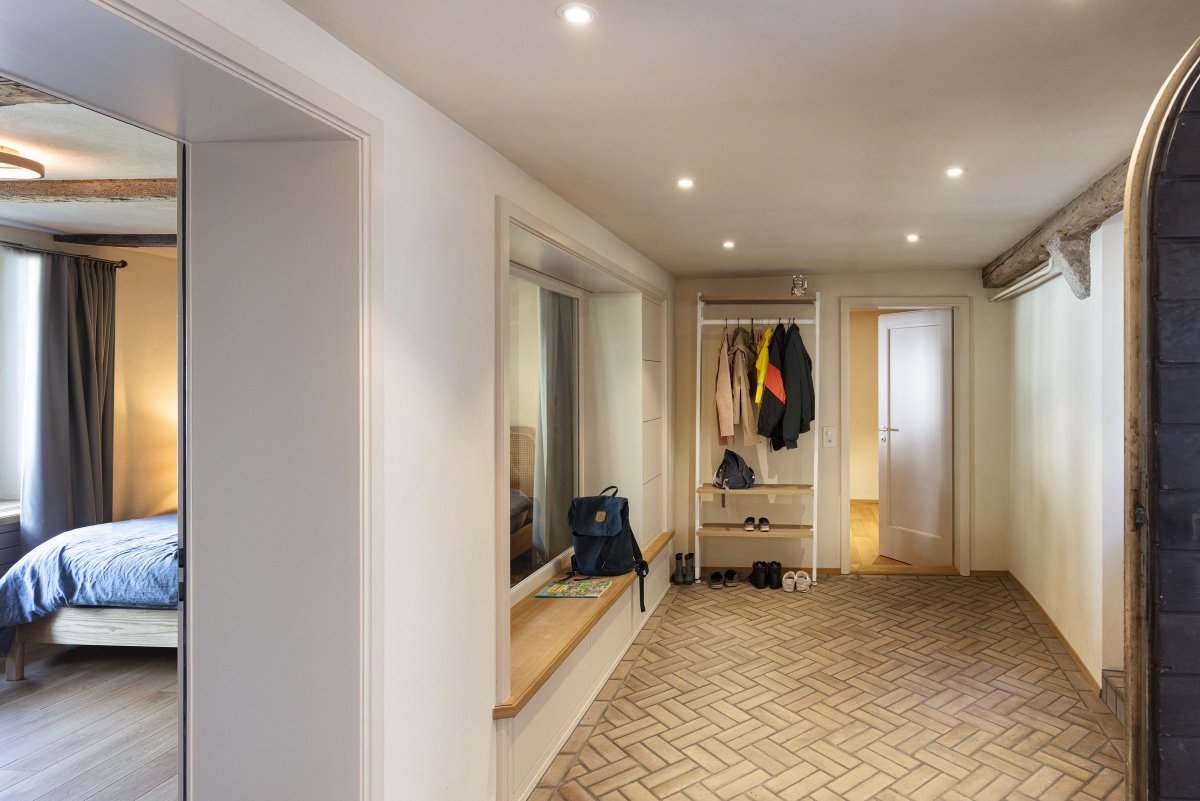
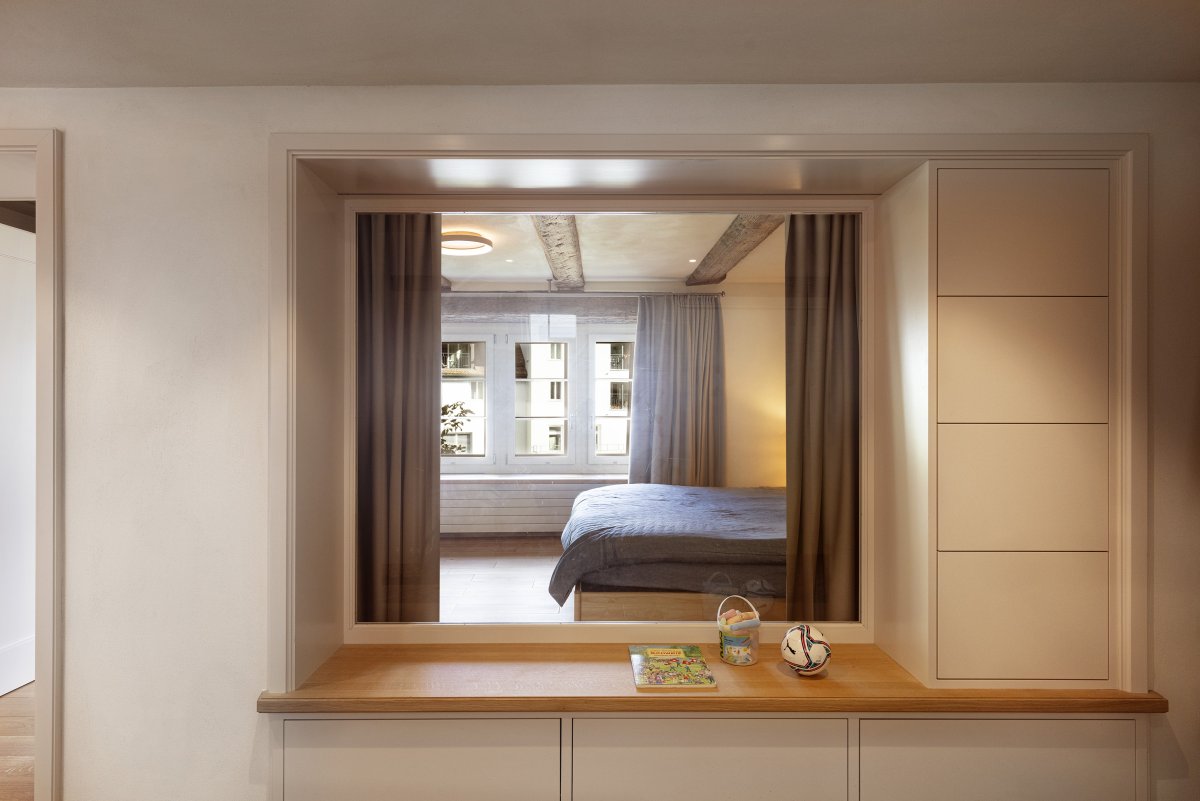
The focus of our intervention was on the interior; we postponed work on the exterior, which was also in need of renovation. As is typical of mediaeval buildings, the rooms are rather deep, the ceilings are low and the windows are small. Our concept was to bring light into each room from two sides, using interior glazing, serving hatches or simple light openings in doors. The improvements were significant. The visual effect of seeing daylight from two sides, has a major impact on how one perceives a space.

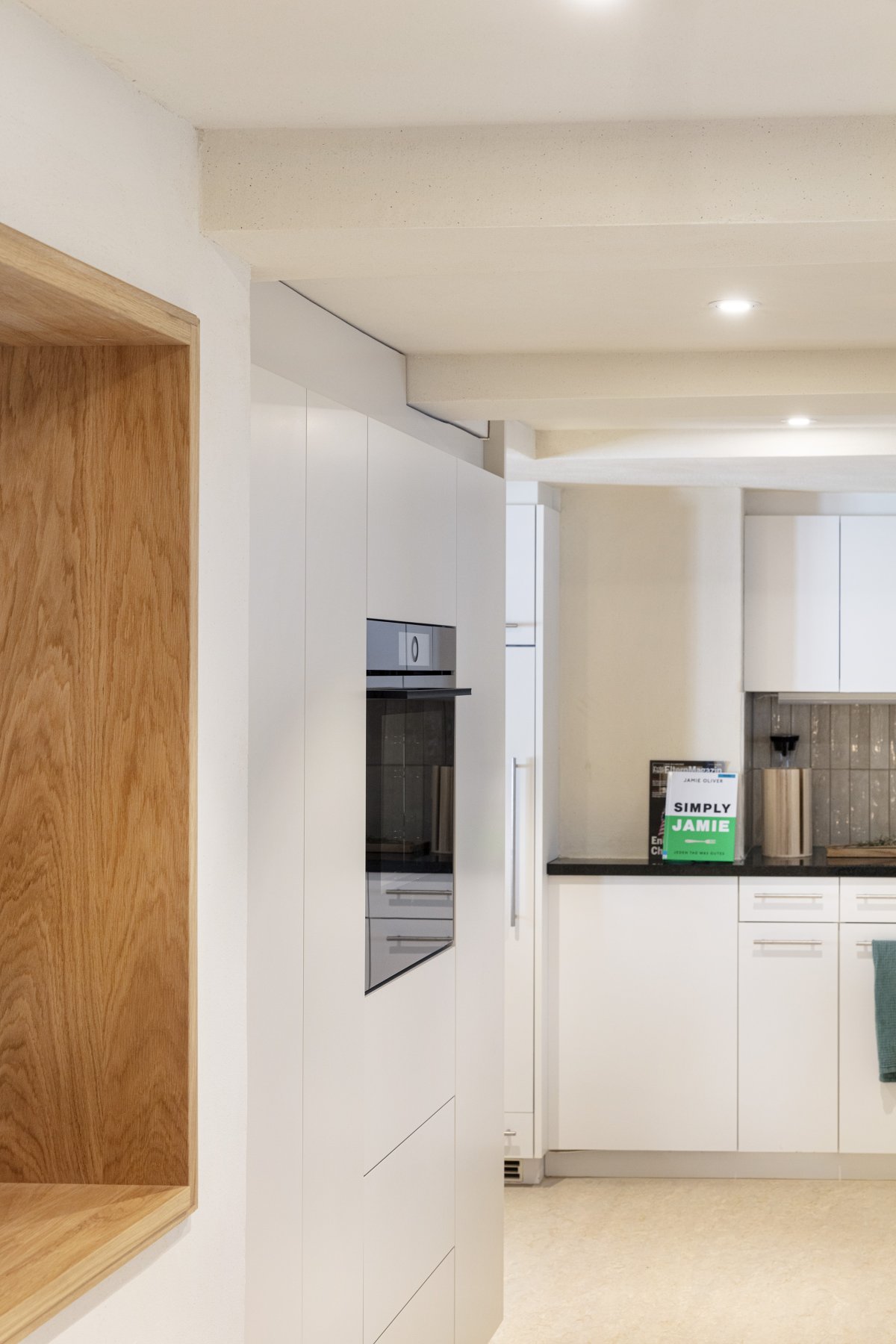
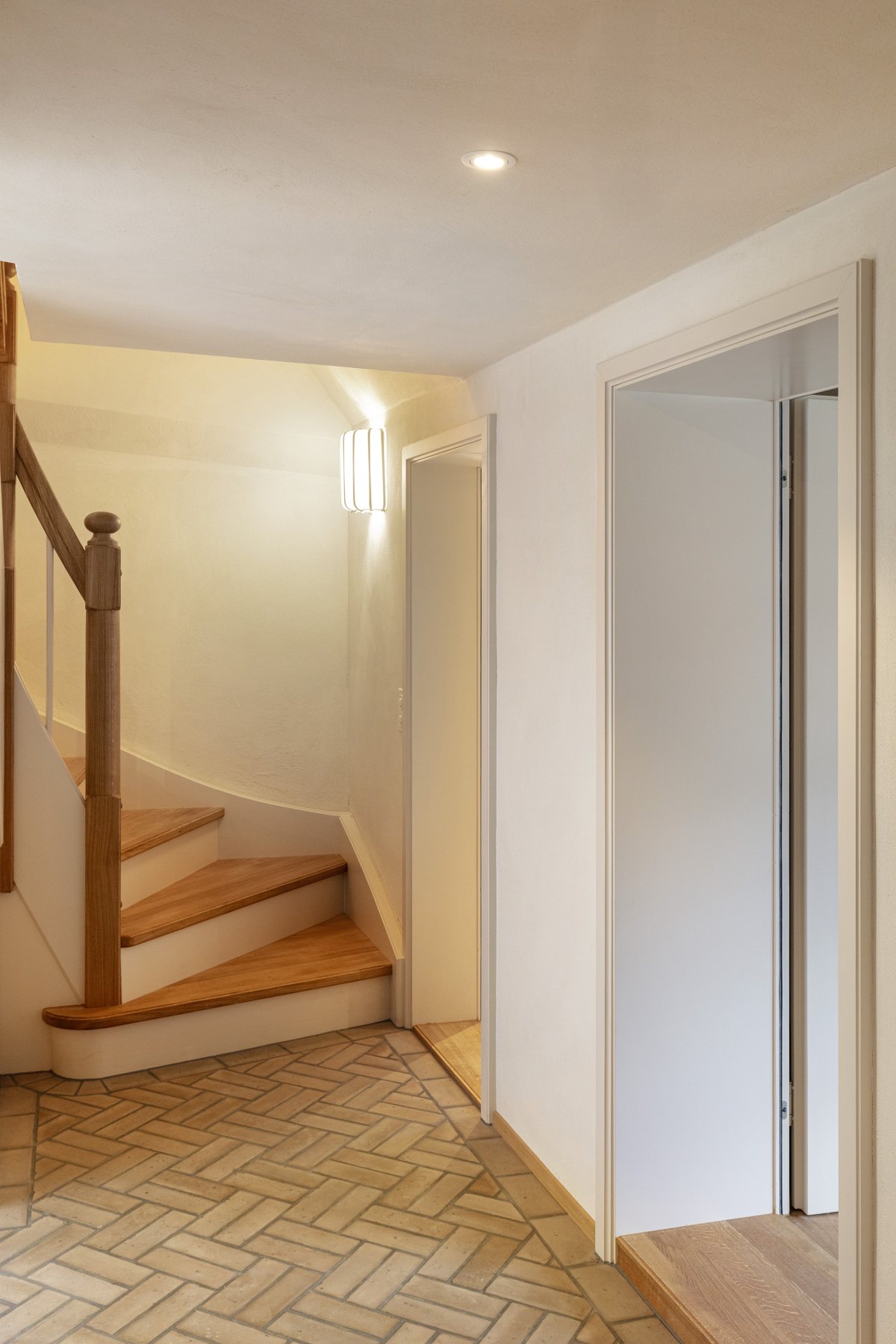
On the ground floor, we created a larger entrance hall with a clay tile floor – a valuable addition to an old town house that has neither a canopy nor a porch. The kitchen from the 1990s was retained; we only replaced the flooring and the green glass wall tiles.

The external stone walls were lined with mineral-based insulating plaster (HAGA Biotherm) up to eight centimetres thick. The new internal walls consist of a wooden stud frame lined with wood fibre-reinforced clay boards (HAGA D22) and were coated with lime render (HAGA Calkosit). The insulation was sheeps wool.

The insulating plaster significantly increases the surface temperature of the exterior walls and halves energy transmission. With their high heat storage capacity, the clay boards contribute to a balanced indoor climate. Both materials also have a strong moisture-regulating effect, which is a significant contribution to the comfort and longevity of the house.

Client
Private

Services
General planning, Architecture and Construction management

Collaboration
Lisa Stango, Sascha Rezzonico, Anouk Zaug, Jessica Wälti

Planning team
Fire Consultant: Conti Swiss AG, Solothurn

Realisation: October 2024 to June 2025